
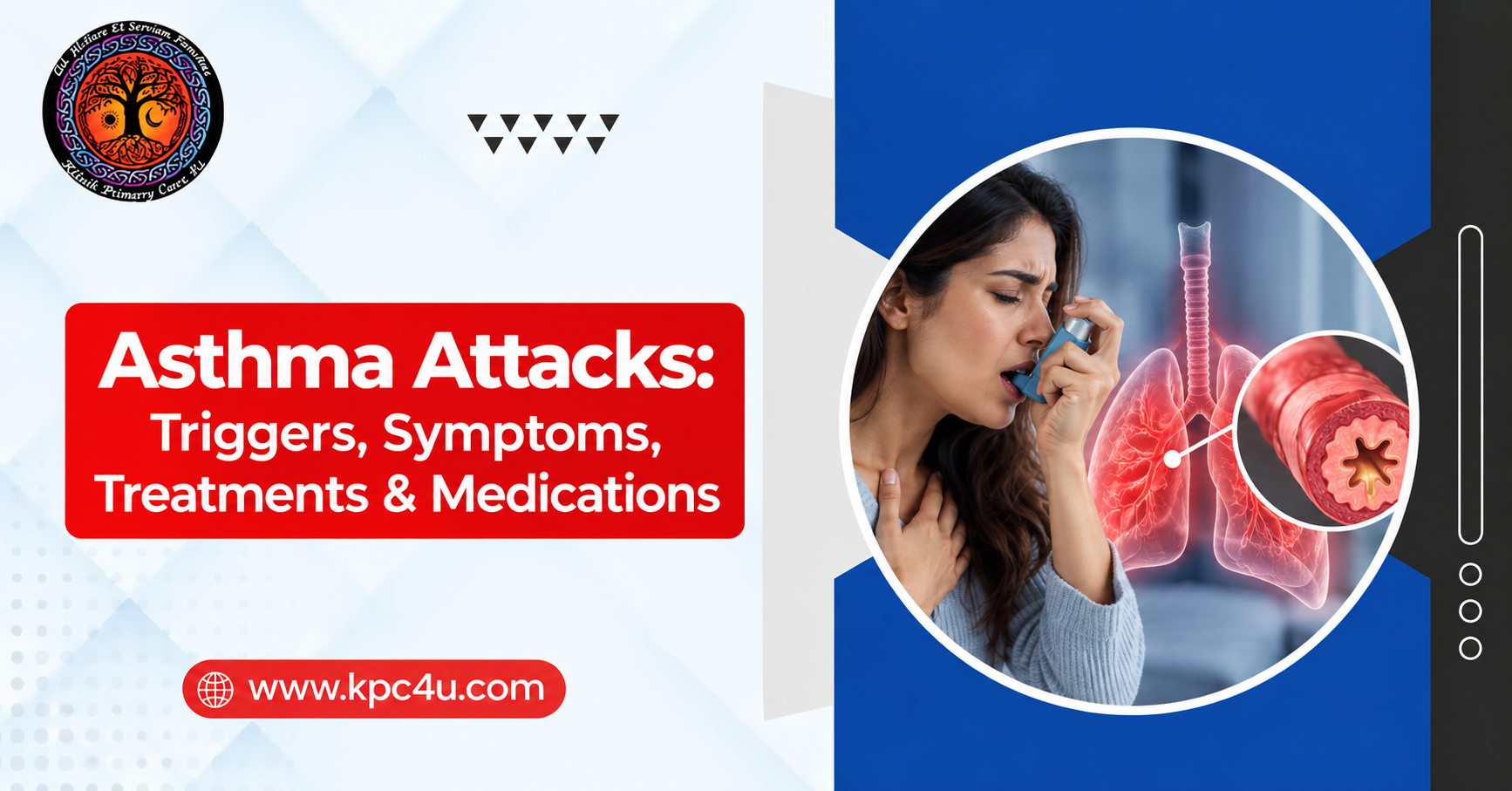
Asthma Attacks: Triggers, Symptoms, Treatments & Medications
If you live with asthma, you probably remember the first time it truly scared you. Maybe it was a night when you couldn’t stop coughing, or a short climb up the stairs that left you gasping. Asthma attacks feel sudden, but most of them send out small warnings first, and learning to read those signs makes a big difference. In this guide, we’ll walk through what sets an episode off, how it feels, and what to do when it starts.
What Triggers Asthma Attacks?
Asthma means the airways in your lungs are always a little inflamed and touchy. When something irritates them, the muscles around the tubes squeeze tight, the lining swells, and mucus builds up. Air has a harder time getting through, and that’s when you start wheezing. If this keeps happening, getting Asthma Treatment in Kuala Lumpur early can stop it from becoming normal.
The tricky part is that no two people react to the same things. Still, a few asthma attack triggers show up again and again:
- Dust mites, mould and pet fur. They hide in bedding, sofas, carpets and damp corners.
- Haze and smoke. Malaysia’s haze season is a well-known problem for people with sensitive lungs, and cigarette smoke is just as bad.
- Colds and flu. A simple viral infection can leave the airways irritated for weeks.
- Exercise. Running in cold or dry air is a classic culprit.
- Strong smells. Perfume, floor cleaner, incense and mosquito coils all count.
- Weather swings. A sudden temperature drop or a very humid day can do it.
- Some medicines. Aspirin and certain painkillers affect a small group of patients.
- Stress. Laughing hard, crying or feeling anxious changes how you breathe.
Try jotting down what you were doing each time your chest felt tight. After a few weeks, a pattern often shows up on its own.
Asthma Attack Causes: Why Some People Get It
Triggers start an episode, but they don’t explain why you have asthma in the first place. Family history plays a big part. If a parent has asthma, eczema or hay fever, your chances go up. Childhood chest infections, growing up around smoke, being overweight and working around dust or chemicals can also add to the risk. And when everyday inflammation isn’t well controlled, the airways become jumpy enough to react to almost anything.
Asthma Flare-Up Symptoms You Shouldn’t Ignore
Most people describe an episode as “someone sitting on my chest.” Here are the asthma flare-up symptoms doctors ask about most:
- A whistling or squeaky sound when you breathe out
- A cough that gets worse at night or in the early morning
- Tightness across the chest
- Feeling short of breath, even when resting
- Trouble finishing a sentence without pausing
- Reaching for your reliever inhaler more often than normal
Many patients say they felt “off” a day before things got bad, with a mild cough, unusual tiredness or a dip in their peak flow reading. Catching it at that stage gives you time to act. If you notice these signs more than twice a week, don’t wait for a bad night. A visit to a family care clinic in kuala lumpur lets a doctor check your lungs, review your inhaler technique and adjust your treatment before things get worse.
When It Turns Serious
Some signs mean you shouldn’t try to manage it alone:
- The reliever inhaler barely helps
- You can only say a few words at a time
- The skin around your ribs or neck sucks in with each breath
- Lips or fingertips look blue or grey
- You feel very drowsy, confused or exhausted
Asthma Attack Treatment: What to Do in the Moment
The first rule is to try to stay calm. Panic tightens your breathing even more. Here is a simple routine most doctors recommend:
- Sit up straight and loosen anything tight around your chest or neck. Lying down makes it worse.
- Take your reliever inhaler, usually the blue one with salbutamol. One puff at a time, every 30 to 60 seconds, up to 10 puffs. A spacer helps the medicine reach deeper.
- Breathe in slowly through your nose and out through slightly pursed lips.
- Step away from whatever set it off, like smoke or a dusty room.
- Watch how you feel. If there’s no improvement after a few minutes, treat it as an emergency.
Your own doctor may have given you a written action plan. If so, follow that first, because doses can differ from person to person.
Asthma Emergency Treatment: When Home Care Isn’t Enough
If the warning signs above appear, don’t wait and see. Call +60 320220239. Keep using your reliever while you wait for help. At the hospital, doctors usually give nebulised medicine to open the airways, oxygen if levels are low, and steroids to bring down the inflammation. Some patients stay overnight for observation. It’s always better to go early and be told it wasn’t needed than to delay when your breathing is failing.
Common Asthma Medications
There are two main types, and they do different jobs.
Relievers work fast, usually within minutes, to relax the tight airways. Salbutamol is the one most people know. It’s meant for symptoms, not for daily prevention.
Controllers are taken every day to keep inflammation down so episodes happen less. These include inhaled steroids, combination inhalers that add a long-acting bronchodilator, and tablets like montelukast. People with severe or allergic asthma may be referred to a specialist for newer biologic treatments.
One thing worth checking: how you use your inhaler. Studies and clinic experience both show that many people don’t get the full dose because of poor technique. Ask your doctor or nurse to watch you use it at your next visit.
Living With Asthma Day to Day
Good control is mostly about small habits. Take your controller medicine even on good days. Wash bedding in hot water every week. Wear a mask when the haze is bad. Get your flu jab each year, and keep an in-date inhaler in your bag.
It also helps to have one doctor who knows your history. Look for a clinic that will build a personal action plan, check your lung function and adjust your medicines over time, so the same team can track how your asthma changes from one visit to the next.
Frequently Asked Questions
How long does an episode last?
It depends. A mild one may ease within minutes of using a reliever, while a severe one can go on for hours or even days if untreated. If you’re not improving quickly, get medical help.
Can stress bring on a flare-up?
Yes. Anxiety and strong emotions change your breathing pattern and can tighten the airways in people who already have asthma. Good daily control makes you less sensitive to this.
Is asthma curable?
Not at the moment, but it can be controlled very well. Most people who stick to their treatment live normal, active lives.
Can I still exercise?
In most cases, yes, and staying active is good for your lungs. Warm up first, use your reliever beforehand if your doctor has told you to, and skip outdoor workouts during heavy haze.
When should I see a doctor?
Book a visit if you wheeze or cough often, use your reliever more than twice a week, wake up at night with symptoms, or have ever needed emergency care for your breathing.
Final Thoughts
Asthma Attacks can be frightening, but they don’t have to run your life. When you know your triggers, notice the early signs and keep your inhaler within reach, you’re already ahead of most episodes. Never brush off severe symptoms, and go straight to emergency care if your breathing doesn’t settle. Regular check-ups with a doctor who understands your condition remain the best way to keep things steady.